Meet the new AHEP Chair: Rachel Hill-Kelly
The new Chair of AHEP, Rachel Hill-Kelly, shares an insight into her career, sector challenges and plans for the joint AHUA and AHEP conference this year.

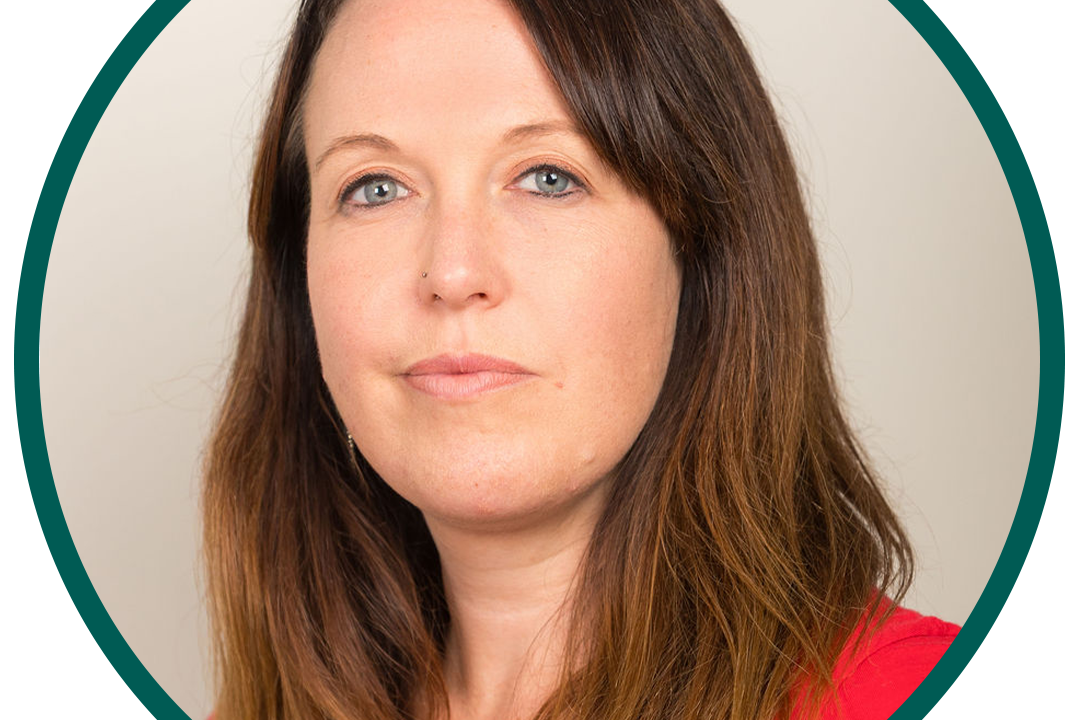
What made you stand to be the Chair at AHEP?
I joined the AHEP Board in 2023 as a trustee and the organisation’s first Honorary Secretary. I’ve always thought AHEP—then known as AUA is brilliant. Its members together create an offering far beyond what any single institution could provide. What I love most, though, is that it’s a two-way street: members not only benefit from AHEP but also have real opportunities to give back—to the organisation and to the wider sector.
Becoming a trustee felt like the right way to say thank you. AHEP has given me so many opportunities to grow and stretch in my career, and I wanted to help secure that for others too. When the chance came up to become Chair, it felt like the perfect next step—a way to help AHEP build on its new identity and be bold about what it can offer in the future.
Tell us more about your day job with QAA and what lead you to this role.
My day job involves leading the Governance team, providing advice on both internal and external governance matters and providing secretariat to the Board and its various sub-committees. Governance is responsible for appeals and complaints about QAA’s work, and we have numerous frameworks I need to be familiar with, including the European Standards and Guidelines (ESG). I have been at QAA for four years, prior to which I have held various roles at the universities of Reading, Oxford and Birmingham and had a stint as an early years primary school teacher at completely the other end of the education spectrum!
What do you think the key opportunities and challenges are that AHEP and AHUA members might share in the coming year?
Members are navigating many of the same challenges—and those challenges mirror what’s happening across the wider sector. One of the biggest questions is how and when to use Artificial Intelligence responsibly. We’re all learning what it means to be thoughtful consumers of AI, and how to make sure it genuinely adds value to our work. It’s a space of both opportunity and uncertainty, and one that will help shape the future of how we all operate.
Financial pressures dominate much of the sector’s thinking. Even with the white paper reprieve on undergraduate fees, everyone is being asked to do more with less and that impacts our members directly.
Collaboration stands out as both a challenge and an opportunity. It’s the sector’s real superpower, but it’s not always easy. There are structural complexities, competing priorities, and practical constraints to navigate—and our members are the ones tackling those head-on. That’s why AHEP’s annual lecture, delivered last year by QAA’s CEO Vicki Stott, is titled “Collaboration in Difficult Times.” It’s a theme that couldn’t feel more relevant.
Still, I think there’s plenty of reason for optimism. Our members don’t just respond to change—they help design it. Not all leadership happens from the front, and across both organisations, people are leading transformation from wherever they work.
You have extensive experience across the education sector, what do you think are the biggest challenges ahead in high education?
Higher education is a dynamic place to be, with some fundamental shifts and divergence taking place. The existential question is, is our sector just ‘higher’ anymore or should we describe it as a tertiary sector? Scotland and Wales now define theirs as tertiary sectors, though differ in how that works. The sector needs to articulate clearly the value it delivers particularly when arguing the need for increased income, either in fees or government funding. Although many sector standards are UK-wide, England has diverged in recent years from standard practice in quality assurance and the recent white paper in England has also effectively linked quality assurance and value for money still further.
Responding to AI offers the higher education sector many challenges but also choice: will we remain passive consumers, or step up as active contributors? Universities have both the capability and the social responsibility to shape AI. The technology rests on a foundation of knowledge that is far from neutral, AI systems learn from what’s already online—content shaped by who has access to the internet and who doesn’t. That means they inevitably mirror and magnify existing inequities. The global digital divide determines whose voices are heard and whose are missing, and those gaps are quietly baked into the algorithms we rely on.
Universities are uniquely positioned to develop AI tools grounded in academic rigour, ethical and sustainable, and inclusive. By leading as creators—not just consumers—our sector can help redefine what responsible AI looks like and ensure it serves society in all its diversity. A great opportunity but not an easy one to navigate.
Who has inspired you and why?
My friends inspire me—they’re everyday superheroes. I’m lucky to know so many brilliant, creative people who juggle it all: parenting, side projects, careers, and life in general. Watching them balance so much while excelling as experts, professionals, and entrepreneurs constantly reminds me what’s possible. Their ability to be everyday amazing genuinely inspires me.
I also have to give a special shout-out to Keith Hodgson, former Academic Registrar and University Secretary at Reading. When I was just 21, Keith took a chance on me and gave me a job in the Graduation Office. He also shared advice that I’ve gone back to time and again throughout my 19 years in higher education. I credit him with introducing me to AUA—and with helping me see that professional services in higher education wasn’t just a job, but a meaningful career.
We are really excited to try out a different type of conference when we partner with AHEP for a joint conference 2026 – what do you hope we can achieve by working together and creating a space for both our members to enjoy
I am already buzzing about the 2026 joint conference between AHUA and AHEP! It’s a great opportunity for the two organisations to work together, and AHUA members will get a chance to see their most engaged members of their staff sharing their expertise. I think it will offer some fantastic speakers the opportunity to talk to our members and a chance for the session contributions to offer a more variety in perspective and spark conversations and collaborations.
Related Blogs