Book Review: One Step Forward, Two Steps Black.  Navigating Anti-Black Workplace Culture by Dr Marcelle Moncrieffe-Newman DBA MA BA (Hons) PGDip PGCert FCIPD

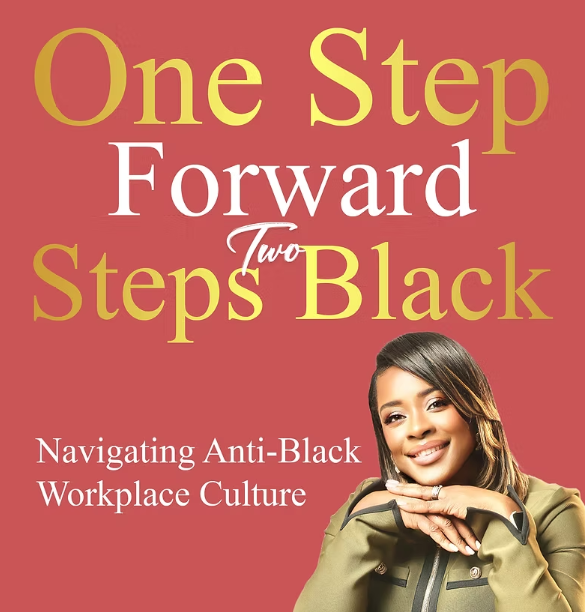
Helen Watson, Deputy President (Operations) at City St George’s, University of London reviews Dr Marcelle Moncrieffe-Newman’s examination of the realities faced by Black talent in today’s workplaces.

Posted by Helen Watson on

Dr Moncrieffe-Newman’s doctoral research, which forms the basis for her book One Step Forward, Two Steps Black. Navigating Anti-Black Workplace Culture was pursued in parallel with her increasingly successful career in human resources. Her extensive HR experience across large public sector organisations includes working at a senior level in universities (she is now the Chief People Officer at City St George’s, University of London). 

Alongside detailed research and direct experience of developing strategies to shape the workplace cultures she examines, Dr Moncrieffe-Newman brings to the narrative some of her personal experiences as a senior Black professional. Historical understanding, robust research, lived experience and a clear and engaging writing style combine to make this book a compelling read. While it is painful to read of the injustices, poor institutional decision-making and the effect of bias on talented and qualified individuals recounted in this book, Dr Moncrieffe-Newman’s resolute optimism is reflected in the pragmatic and achievable strategies for action she proposes. These practical steps should be considered by all employers committed to inclusion and improving diversity at the most senior level in their organisations.

This book is important for AHUA members. In the first chapter, Dr Moncieffe-Newman cites research which consistently shows that diverse and inclusive workplaces outperform their competitors. She notes that research carried out by Watch this Space in 2024 indicated that diverse teams are 35% more likely to outperform their competitors, and are 87% better at making decisions. Universities are facing challenging times – we need the best possible quality of senior leadership to steer our organisations successfully.  

We also owe it to our students to create and sustain a workforce which reflects the diversity of the student body. Not just because a diverse workforce is more likely to make good decisions which reflect the values and experiences of the students we are here to support. And not simply because we owe students a good experience in return for the financial and emotional commitment they have made to higher education. But also because diverse senior role models are so important for inspiring the next generation of employees to succeed in their chosen careers. Dr Moncrieffe-Newman highlights in Chapter Two how persistent negative stereotyping, absence of diverse role models and poor career guidance hamper young Black people’s career aspirations. A diverse and talented university workforce now will lead to an even more diverse and talented workforce in the future. But perhaps most importantly we should acknowledge the responsibility the University sector has for shaping society through our research and teaching – with such a responsibility, it is imperative that universities treat their staff internally in a fair and just manner.

Over six chapters, Dr Moncrieffe Newman explores the history of Black people in the UK; how racism manifests in workplace culture, lower pay, major events and everyday situations; Black employees’ lived experience of the workplace (gathered through 30 in-depth interviews with Black professionals); the role of Human Resources; models for creating a racially inclusive workplace culture; and how to turn action planning into reality (‘Beyond lip service – turning talk to action’). Through this clear structure, the author sweeps the reader from exploration of how racism, bias and discrimination infect British society, to the lived experience of Black professionals navigating careers and through to commitment to action.

Publication of this book has come a few months after Breaking Barriers: Advancing Ethnic Diversity in Higher Education Professional Services, commissioned by AHUA from Nottingham Trent University. Common themes emerge from interviews in both studies – systemic issues and cultural barriers, emotional exhaustion, and the weakness of many Diversity and Inclusion (DAI) initiatives.  Similarly, embedding leadership accountability; mentoring, coaching and sponsorship; and auditing recruitment and promotion practices feature in both publications’ recommendations. Taken together, the publications are a clear call to AHUA members to take a part in delivering a step change within our sector.

One Step Forward Two Steps Black.  Navigating Anti-Black Workplace Culture by Dr Marcelle Moncrieffe-Newman is available here

AHUA Expert Exchange: Governing Student Recruitment: What Senior Leaders Need Their Boards to Ask

Thursday 21st May, 2026, 16.00-17.00

Drawing on recent sector experience and governance reviews, this webinar will explore how executives can support boards to challenge recruitment targets constructively. Panellists from Huron will explore what boards might expect to see on recruitment, how committees can divide oversight effectively, and how dashboards, scenario modelling and risk indicators can enable earlier, better‑quality conversations.


Register here